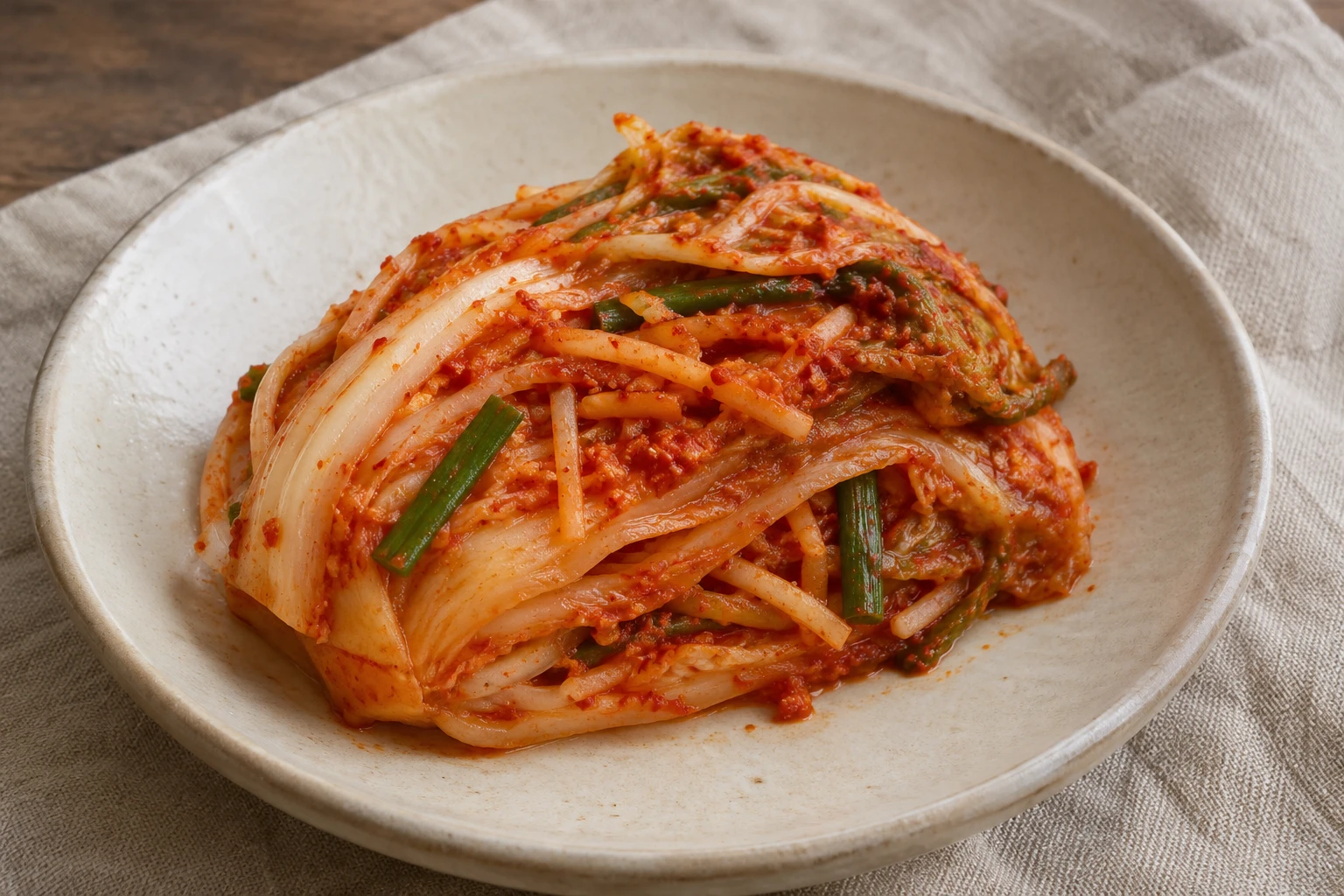
Napa cabbage kimchi (Baechu-kimchi)
Nutrition / servings
72kcal
4gProtein
13gCarbs
1gFat
Ingredients
- For salting the cabbage
- 4.41 lb (2 kg) Chinese cabbage
- 5.29 oz (150 g) salt
- 8.45 US cup (2 l) water
- For the seasoning paste
- 2 tbsp rice flour
- 6.76 US fl oz (200 ml) water
- 1 tbsp sugar
- 2.12 oz (60 g) gochugaru
- 1 head garlic
- 0.71 oz (20 g) ginger
- 4 tbsp fish sauce
- 10.58 oz (300 g) daikon
- 4 pcs spring onion
Description
1. Cut the napa cabbages in half lengthwise (cut into the stem, then pull apart by hand), dissolve part of the salt in the water, dip the halves in it, then sprinkle the rest of the salt between the leaves, mainly on the thick white parts.
2. Leave cut side up for 5-6 hours, turning every hour, until the white parts become bendable; then rinse thoroughly three times and drain cut side down for 1 hour.
3. Cook the rice flour with the 200 ml of water in a small pan, stirring, into a thick paste, stir in the sugar and let cool.
4. Add the gochugaru, grated garlic and ginger, fish sauce, daikon cut into matchsticks and spring onion cut into 4 cm pieces to the cooled paste, and mix thoroughly with gloved hands.
5. Spread the seasoning paste evenly between the leaves, leaf by leaf from the outside in, then fold each half in two and wrap it with its outermost leaf.
6. Pack tightly into a jar or container, pressing down so no air remains, ferment at room temperature for 1-2 days, then refrigerate; it's tastiest after 1 week.
Tip: Baechu-kimchi is the soul of Korean cooking – in autumn, families make the winter supply together over several days (kimjang). Salting is the most important step: if the cabbage still snaps, wait longer. Sour, well-aged kimchi makes the best kimchi-jjigae and kimchi-bokkeumbap.
Add it to your calendar and plan your weekly meals with it!
Your plan stays in this browser for up to 24 hours. Register or sign in to review and save it to your calendar, keep your recipes and use your shopping list later.